 AI in Business
Where AI actually helps a mid-size business today
Forget the hype. These are the everyday business tasks where AI already saves real time, and a simple way to try it without a big budget.

AI in Business
An AI calling agent can phone every new lead within minutes, in the caller's own language, and book a slot in your calendar. Here is how it works, where it helps and where it does not.
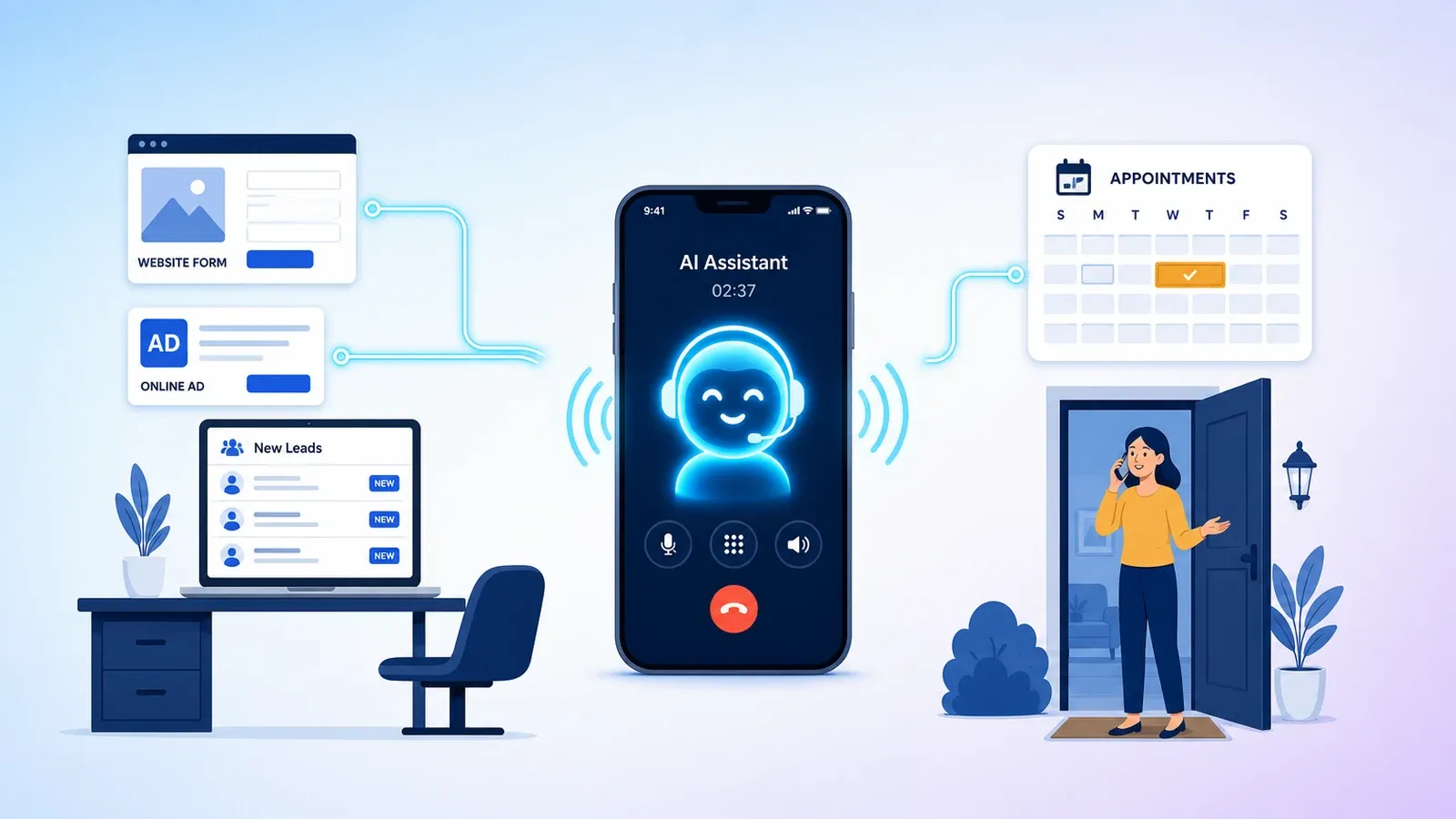
Most Indian businesses lose leads in the same quiet way. An enquiry comes in from a website form, a Facebook ad or a property portal. Someone means to call back. The day gets busy, the call happens the next afternoon, and by then the customer has already spoken to two competitors.
An AI calling agent fixes that one gap. It calls every new lead within minutes, talks to them in their language, answers the common questions and books a time with your team. This article explains how it works, where it helps and where a person is still the better choice.
An AI calling agent is software that makes and receives phone calls and holds a natural spoken conversation. It listens to what the customer says, understands the meaning rather than waiting for keypad presses, and replies in a human-sounding voice.
It is different from the old recorded IVR ("press 1 for sales"). The customer can speak freely, interrupt, ask a question out of order or switch between English and Hindi, and the agent keeps up.
If the customer asks something outside the approved script, or simply wants a human, the agent says so politely and passes the lead to your team.
AI calling works best where leads are many, the first conversation is repetitive, and speed matters.
In India, a caller who speaks only English loses a large share of customers. A good AI calling agent can speak English, Hindi and regional languages such as Gujarati, and can switch mid-call when the customer does. Customers stay on the line longer when they hear their own language, and they answer questions more completely.
| Task | AI calling agent | Human caller |
|---|---|---|
| Calling every new lead within minutes | Strong | Hard to keep up at volume |
| Same qualifying questions on every call | Consistent every time | Varies by person and mood |
| Calls outside office hours | Yes, within allowed calling times | Usually not |
| Complex negotiation or complaints | Weak, should hand over | Strong |
| Building a long relationship | Supports it | Leads it |
The best setups use both. The agent handles speed and volume, and your team spends its time on leads that are already qualified and booked.
Telecom rules in India for commercial calls are strict, and they change from time to time, so check the current TRAI requirements with your telecom provider before you start. Good practice that keeps you on the right side of them:
Start with one use case, usually following up new enquiries. Write down the questions your best salesperson asks, the answers they give and the point at which they hand over. That becomes the agent's script. Run it for a few weeks, listen to a sample of calls, and adjust the wording before you add more use cases.
If you want to hear how an AI calling agent would sound for your business, in English, Hindi or Gujarati, our team can set up a short demo with your own questions.

We build ready products and custom software for Indian businesses, and write about what we learn on the way.
AI in BusinessForget the hype. These are the everyday business tasks where AI already saves real time, and a simple way to try it without a big budget.
Tell us what you are trying to fix. We will read it properly and come back with a clear next step.