Excel and WhatsApp have run more Indian factories than any ERP. They are free, everyone knows them, and in the early years they are enough. There is no shame in running on them.
But at some point, the same tools that helped you grow start slowing you down. The problem is that it happens gradually, so most owners notice only when a big order goes wrong. Here are five signs to watch for.
Sign 1: Your stock number depends on who you ask
Stores says one figure. The Excel sheet says another. The purchase person has a third number in their head. Before every important order, someone has to physically check the godown.
What it costs you: urgent purchases at higher rates, idle machines waiting for material, and extra money locked in stock you already have but cannot find.
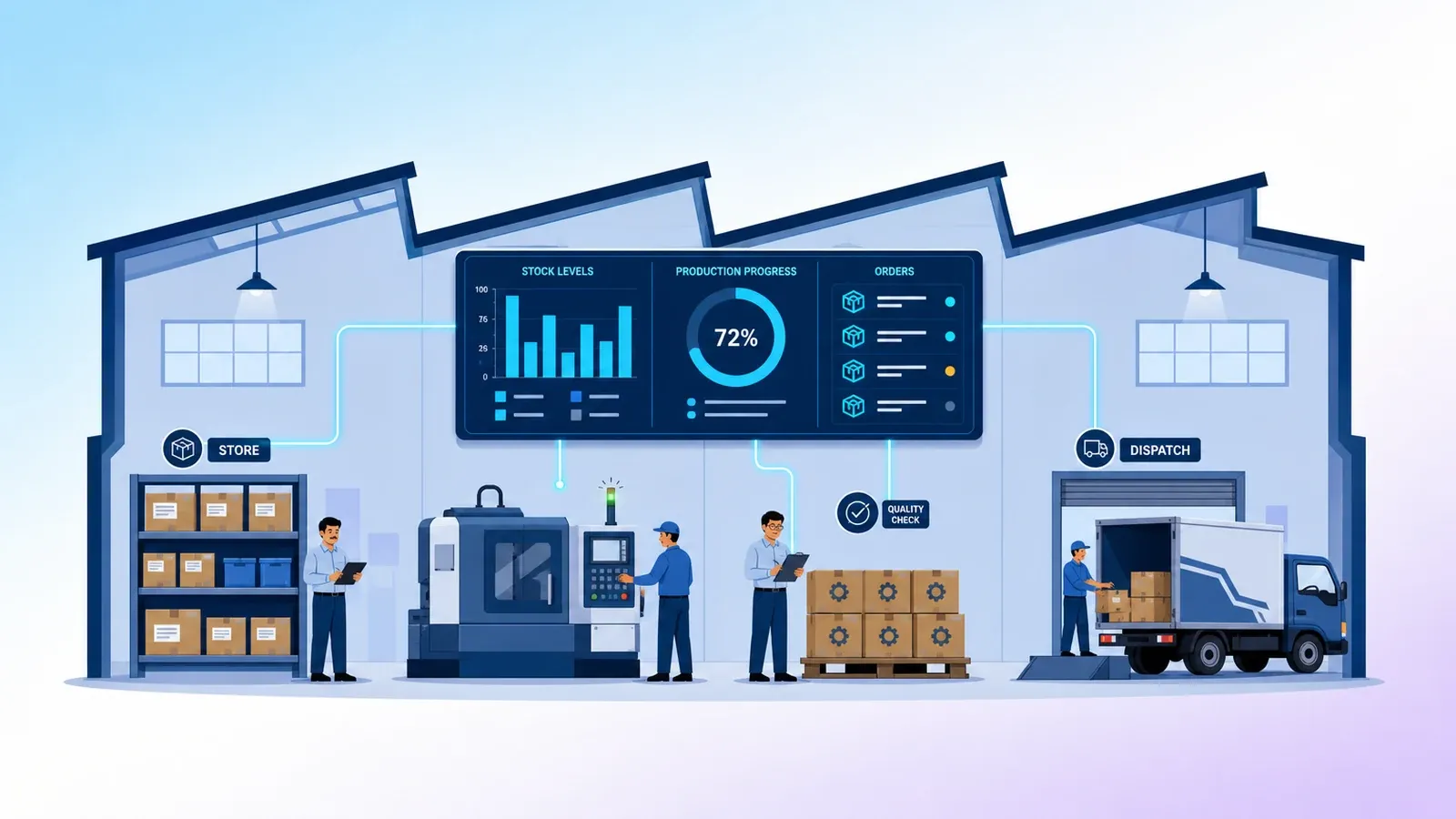
What good looks like: stock updates automatically when material is received, issued to production or dispatched, so everyone sees the same live number.
Sign 2: Orders are tracked in chats and phone calls
A customer calls to ask about an order. Sales messages production. Production checks with the supervisor. Twenty minutes later, someone gives an answer that may or may not be correct.
What it costs you: delayed replies, missed commitments and a sales team that spends its day chasing instead of selling.
What good looks like: every internal order has a status that anyone can check, from booking to job card to finished goods.
Sign 3: Job cards live on paper
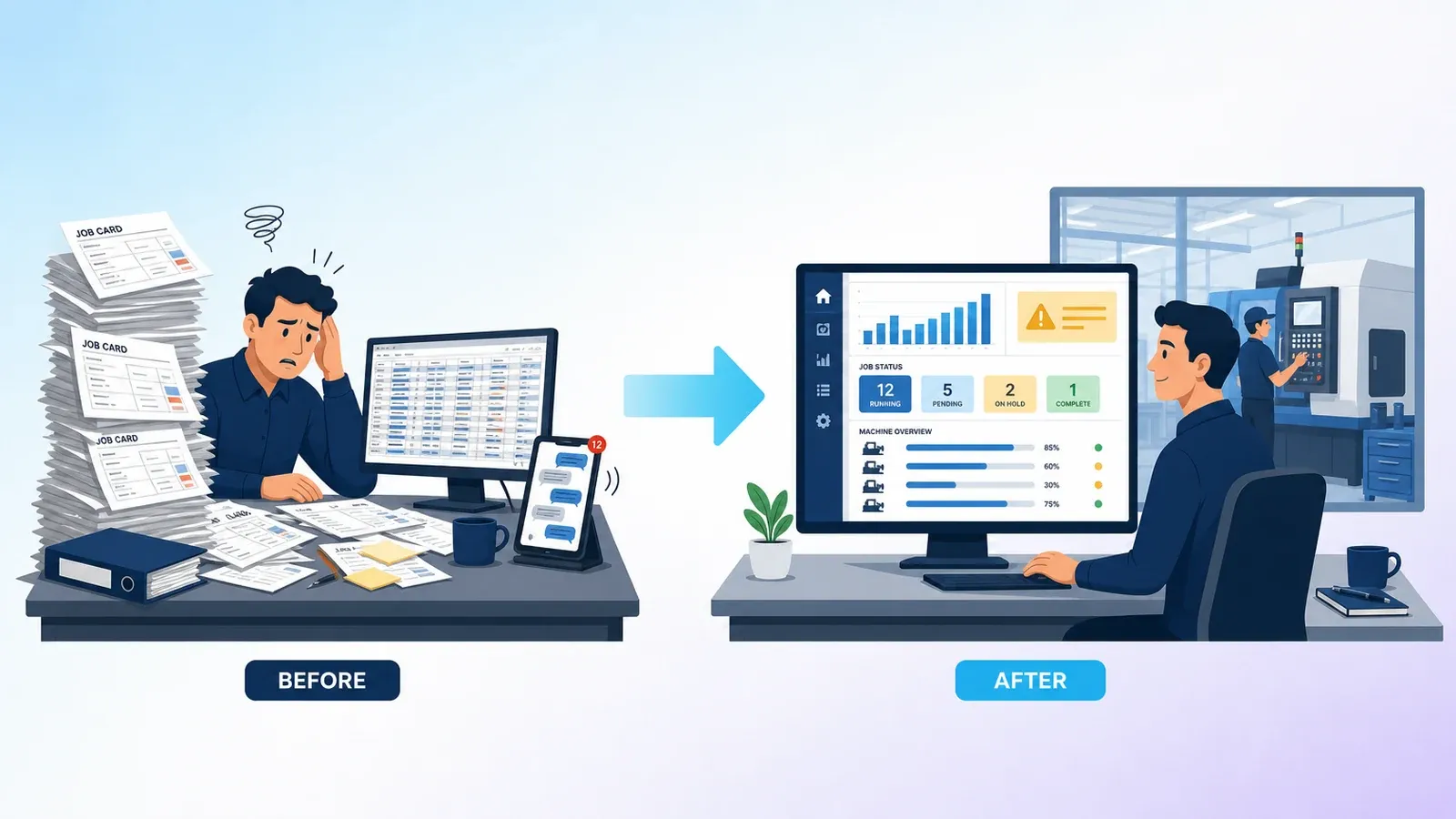
Paper job cards get lost, torn or filled in late. At the end of the shift, someone types them into Excel, if they have time. Nobody knows today's actual production until tomorrow.
What it costs you: no real view of production, wastage that nobody can trace, and planning based on guesses.
What good looks like: operators enter their work on simple screens as it happens, and supervisors see progress on each job card in real time.
Sign 4: Quality records are hard to find
Inspection happens, but records sit in files, registers or photos on someone's phone. When a customer complains or an auditor visits, the team spends hours searching for the right sheet.
What it costs you: stressful audits, repeated defects because nobody can see patterns, and customers losing confidence.
What good looks like: digital inspection and audit forms, linked to the job and batch, searchable in seconds.
Sign 5: Only one or two people know how things really work
If your production planner or stores in-charge takes leave, work slows down. The process lives in their heads and their personal sheets, not in a system.
What it costs you: risk every time someone is absent or leaves, and a business that cannot grow beyond what those people can personally handle.
What good looks like: the process is built into the system, so a new person can follow it and the owner can see what is happening without asking.
If you see two or more of these signs
You do not need to replace everything at once. The best approach for most small and mid-size manufacturers is step by step:
- Pick the biggest pain. For most factories, it is stock or job cards.
- Write down the current process. Who does what, on which form, in what order.
- Start with one or two modules. Get them working properly on the floor.
- Train the people who enter data first. If operators and store staff do not use it, owners will not get good reports.
- Add modules once the first ones are stable. Purchase, quality, finished goods and so on.
What to look for in a system
- Simple screens for the floor. Operators should be able to use it with a few minutes of training.
- Fits your process. Your job cards and inspection formats, not a generic template.
- Web based. Works in the browser without installing software on every computer.
- Can start small. You should not have to buy every module on day one.
- Local support. Someone who understands Indian factories and picks up the phone.
A final thought
Outgrowing Excel and WhatsApp is a good sign. It means your business has grown. The goal is not fancy software. It is simple: everyone in the factory working from the same live information, so you spend less time chasing and more time producing.
Our Manufacturing ERP covers internal orders, purchase orders, stock, job cards, QA inspection forms, operator screens and finished goods, and is customised to your plant. Contact us to talk through your process.

 Manufacturing