 Manufacturing
Five signs your factory has outgrown Excel and WhatsApp
Excel and WhatsApp got your factory this far. These five signs show when they start costing you orders, material and sleep.

Manufacturing
ERP brochures promise everything. These are the eight benefits Indian manufacturers actually notice on the shop floor, and what has to be true for each one to happen.
Every ERP brochure promises the same things: higher efficiency, better visibility, more profit. Those words are true, but they do not tell a factory owner what will actually be different on Monday morning.
This article does. Below are the eight benefits Indian manufacturers notice most once an ERP (Enterprise Resource Planning) system is running properly, with a plain example of each, and what has to be true for it to happen.
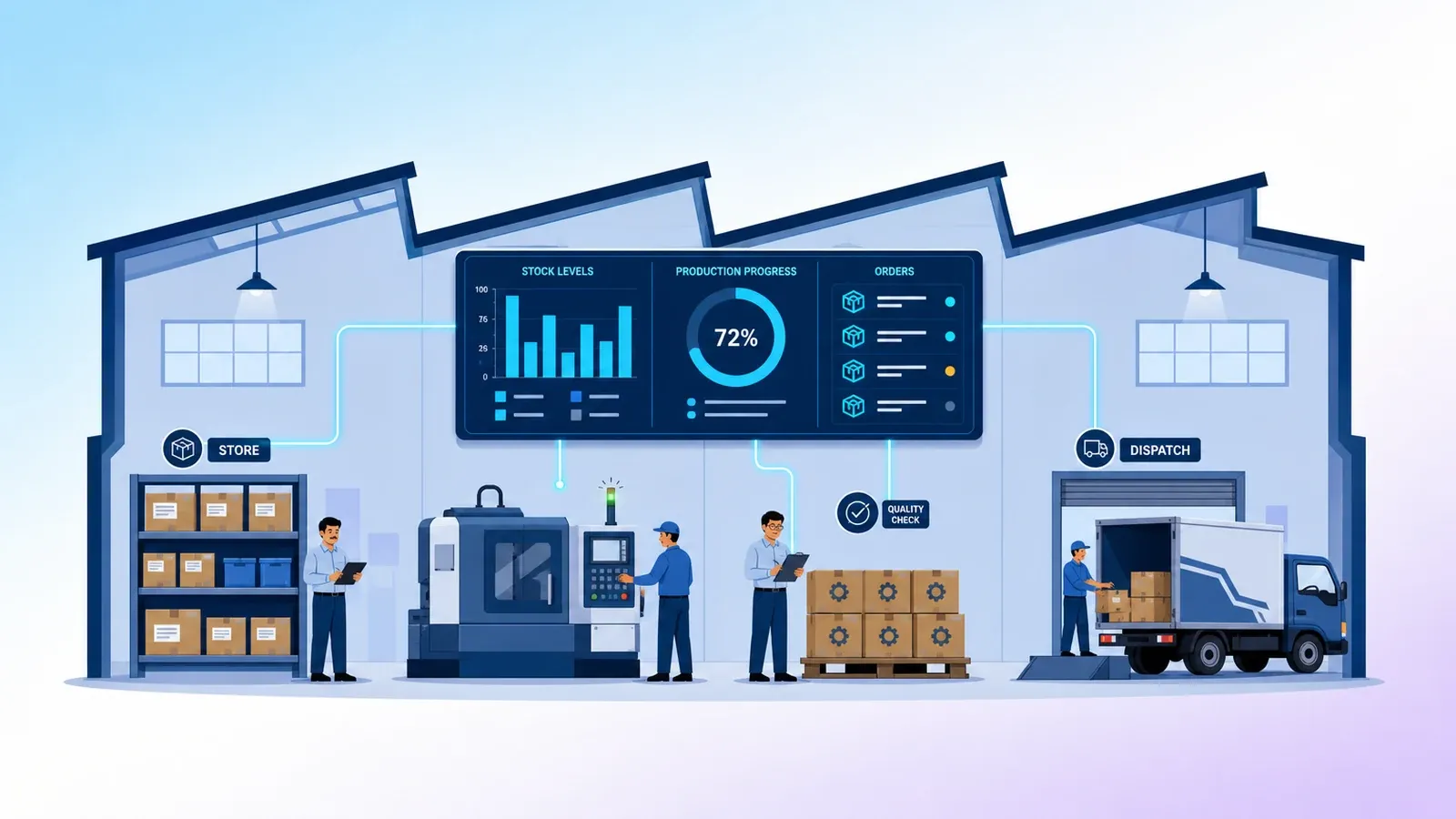
In a manufacturing unit, an ERP is one system where orders, purchase, stock, production, quality and dispatch are recorded in the same place. When stores issues material for a job card, production sees it. When a lot fails inspection, dispatch knows not to ship it. When an order comes in, purchase can see what material is short.
The benefit does not come from any single screen. It comes from everyone working on the same numbers.
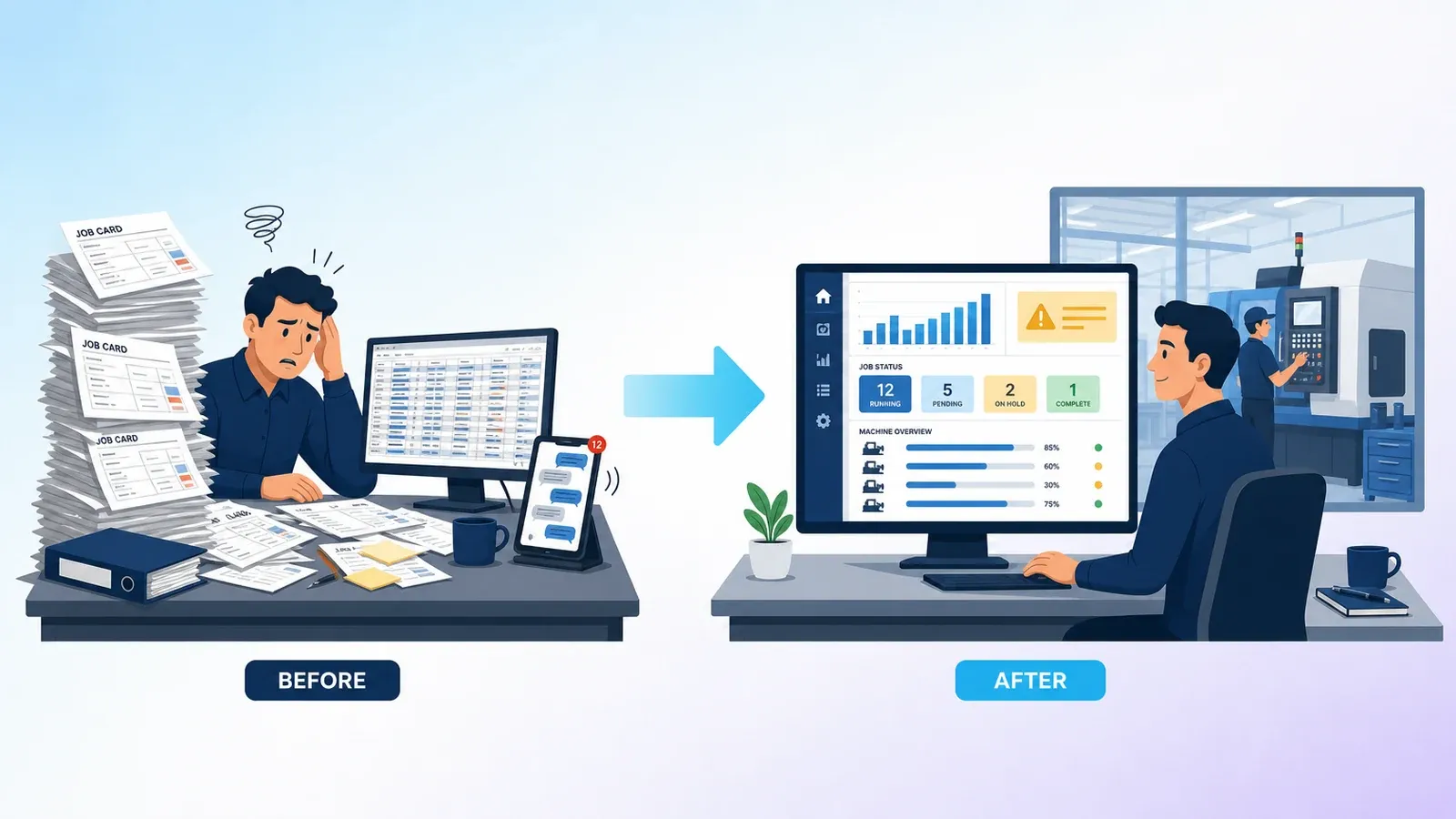
Before: Stores says one figure, the Excel sheet says another, and the real number is in the godown.
After: Every receipt, issue and return is entered as it happens, so the balance on screen is the balance on the shelf. Planning, purchase and the owner all see the same figure.
This is usually the first benefit people feel, and the one that makes the rest possible.
When a new order arrives, the ERP can show which materials are available, which are short and what is already committed to other jobs. Shortages surface on the day the order is taken, not two days before dispatch.
Without reliable numbers, factories over-buy "to be safe". With an ERP you can see consumption over time, set reorder levels per item and buy closer to what you actually use. Cash that sat on shelves goes back into the business.
Job cards move through stages on screen: issued, in progress, inspection, completed. A supervisor or owner can see what is stuck and where, from the office or a phone, instead of collecting updates on WhatsApp.
Inspection results, rejections and rework are recorded against the lot, job card and operator. When a customer complains or an auditor asks, you can pull the history in minutes instead of searching through files. For units working towards ISO or customer audits, this alone can justify the system.
When material issued, scrap and time are recorded against each job, you can see what a product really costs to make. Many owners discover that one or two products they thought were profitable are not, once the real consumption is visible.
In many factories, one person knows the stock, another knows the pending orders, and work slows down whenever they are on leave. An ERP moves that knowledge into the system, so others can step in.
Daily dispatch, pending orders, rejection rate, stock ageing and purchase due: these become standard reports instead of questions you ask around the floor. Meetings get shorter because the numbers are already on the screen.
| Area | Before ERP | With a working ERP |
|---|---|---|
| Stock | Register and Excel, often different | One live balance per item |
| New orders | Shortages found late | Shortages shown on day one |
| Production | Updates by phone and WhatsApp | Job card status on screen |
| Quality | Paper forms in files | Results linked to lot and job |
| Costing | Estimated | Based on actual consumption |
| Reports | Built by hand at month end | Available any day |
An ERP does not create these benefits by being installed. Three things decide whether you get them:
You do not need every module on day one. Pick the area that hurts most today, usually stock or job cards, and get that working well first. Once people trust the numbers in one area, adding purchase, quality and dispatch becomes much easier.
Before you choose a system, list the steps where your plant works differently from the textbook. That list will tell you whether a ready-made product will fit, or whether you need one shaped around your process.
If you want to see what these benefits would look like in your plant, our team can walk through your process and show how our Manufacturing ERP handles it.

We build ready products and custom software for Indian businesses, and write about what we learn on the way.
ManufacturingExcel and WhatsApp got your factory this far. These five signs show when they start costing you orders, material and sleep.
 Buyer Guides
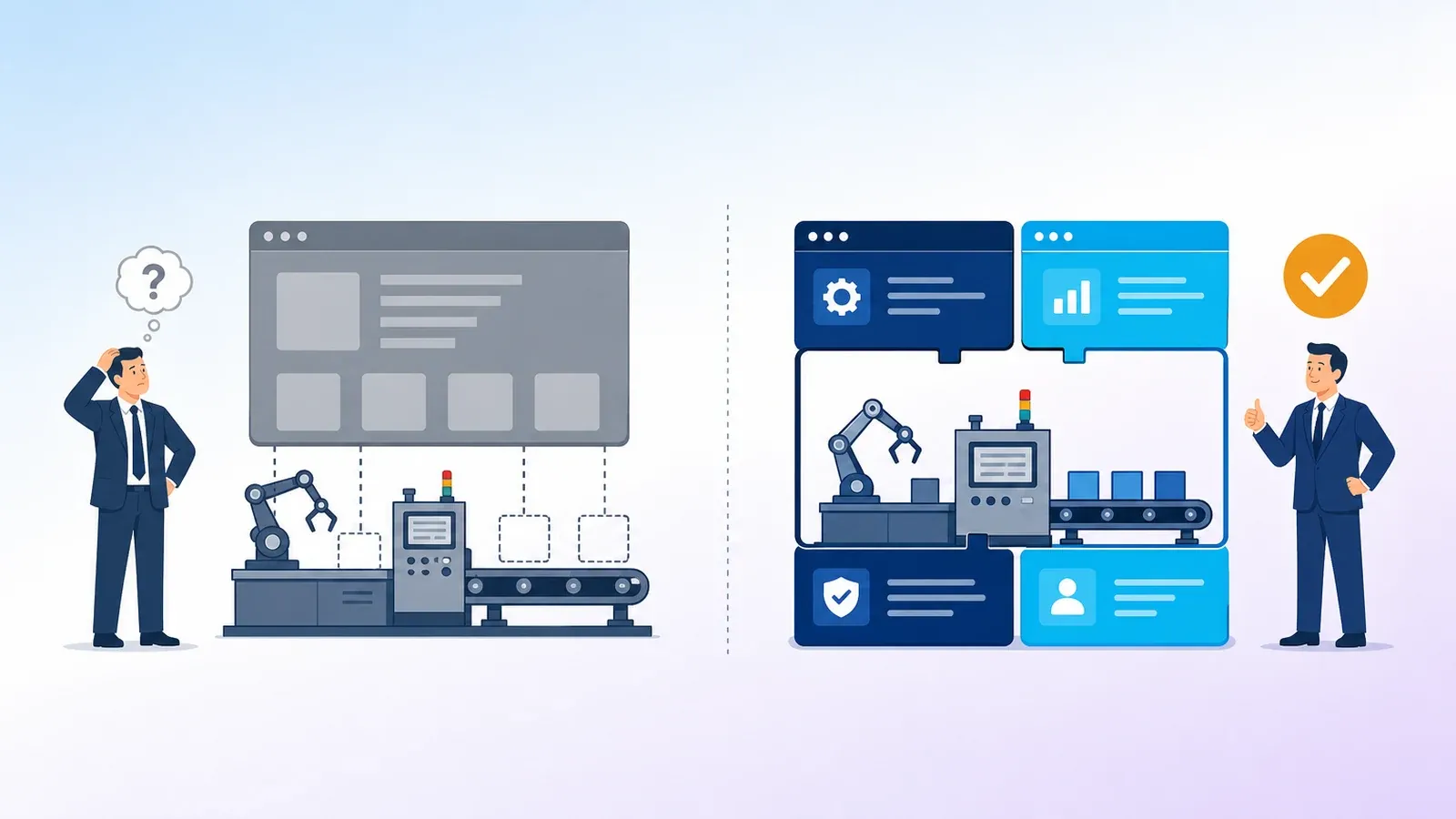
Ready ERP or custom ERP? The right answer depends on how different your process is, how fast you need to go live and who will look after the system.
Tell us what you are trying to fix. We will read it properly and come back with a clear next step.