 Buyer Guides
What really goes into the cost of an online store in India
The website quote is only one part of what an online store costs. Here is the full picture, so your budget does not surprise you three months after launch.

Buyer Guides
Ready ERP or custom ERP? The right answer depends on how different your process is, how fast you need to go live and who will look after the system.
Most manufacturers start looking for an ERP (Enterprise Resource Planning) system after a bad month. An order went out late because nobody knew the material was short. A job card was lost. The stock in Excel did not match the stock in the godown. Someone says, "We need proper software," and the search begins.
Very soon you face the first big choice: buy a ready-made ERP, or get one built for your business. Salespeople on both sides will tell you their way is better. This article gives you a fair way to decide.
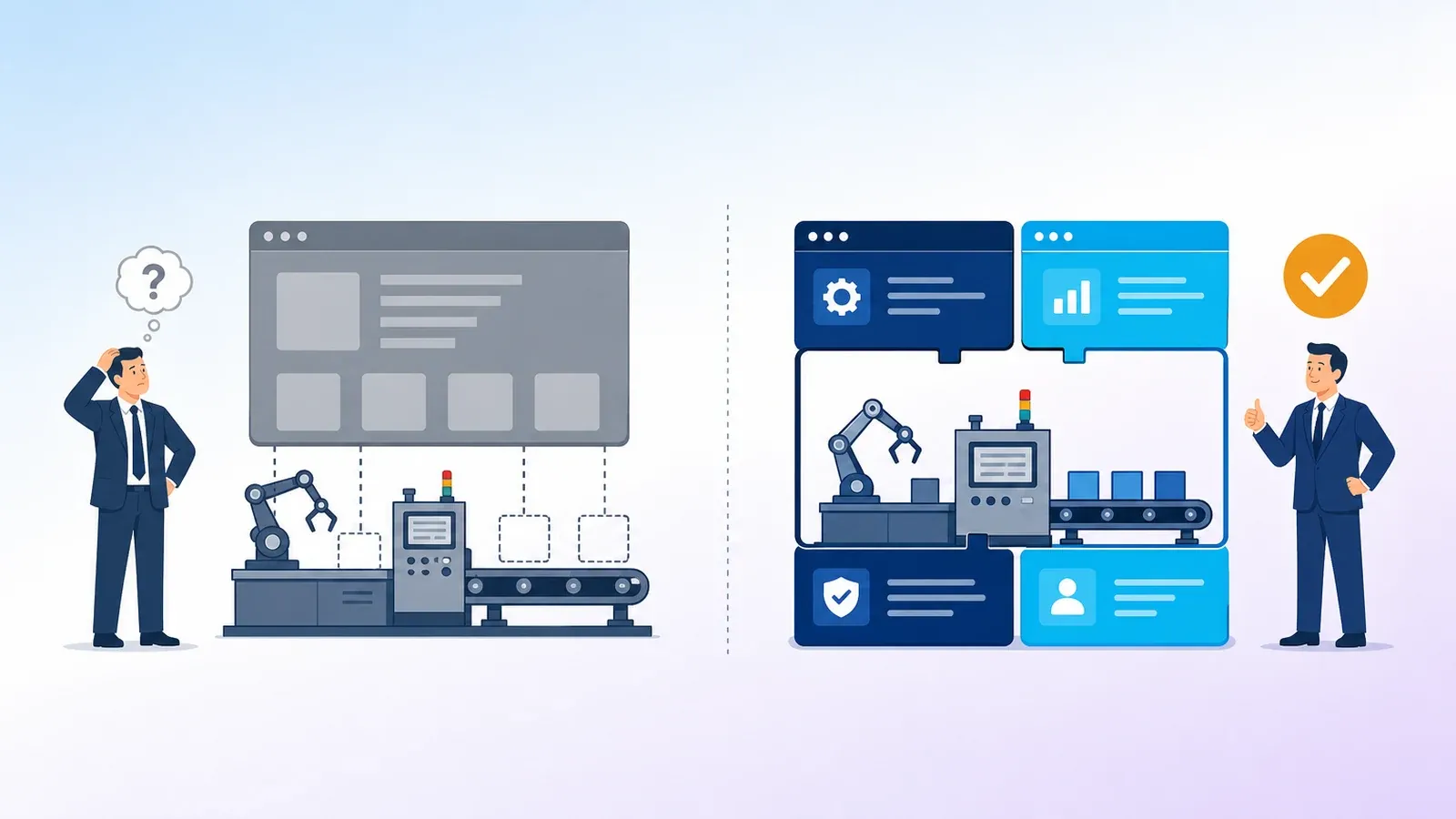
A ready-made ERP is a product used by many companies. You buy a licence or subscription, the vendor configures it, and your team learns to work inside its screens and rules.
A custom ERP is designed around your process. The screens, forms, approvals and reports match how your plant already runs. It can be built from zero, or built on top of an existing ERP base and customised, which is usually faster.
A ready-made ERP is a good choice when:
The advantages are real. The product is already tested by other companies, and you can often see it working before you buy.
Problems start when your plant does not work the way the software expects. We regularly hear the same complaints:
When people keep a second system on the side, the ERP has failed, whatever the brochure says.
A custom ERP makes sense when:
The biggest benefit is adoption. When the software looks like the way your people already think, they actually use it.
Custom is not automatically better. It carries its own risks:
These risks are manageable if you choose carefully, which brings us to the comparison.
| Question | Ready-made ERP | Custom ERP |
|---|---|---|
| Fit with your process | You adjust to the software | Software adjusts to you |
| Time to start | Faster for standard setups | Faster if built on an existing base, slower from zero |
| Floor adoption | Often low if screens are complex | Usually higher, screens match real work |
| Cost pattern | Licence or subscription, plus customisation | Build cost, plus support |
| Changes later | Depends on the vendor's roadmap | You decide what changes |
| Main risk | Paying for software people avoid | Choosing a vendor who cannot deliver |
Ask these inside your company before you speak to any vendor:
You do not have to choose between a rigid product and building everything from zero. A good middle path is an ERP that already has the core manufacturing modules, such as stock, purchase orders, job cards, inspection forms and finished goods, and is then customised to your process.
You get a faster start than a fresh build, and a much better fit than a generic product.
Choosing an ERP is really choosing how your company will work for the next several years. Take a few extra weeks to decide properly. It is far cheaper than living with the wrong system.
If you want to talk through your process, our team can help you decide whether our Manufacturing ERP, a custom build, or a ready product elsewhere is the right fit.
Buyer GuidesThe website quote is only one part of what an online store costs. Here is the full picture, so your budget does not surprise you three months after launch.
 Buyer Guides
Hiring your own developers gives you control. Dedicated developers give you speed and flexibility. Here is how to choose, and why many teams use both.
Tell us what you are trying to fix. We will read it properly and come back with a clear next step.